

Delete parts of a transcript

Jack
January 28
You can now delete specific parts of a transcript, while keeping the rest intact. Which means you can keep the useful parts of your meeting notes and have control over what's stored.
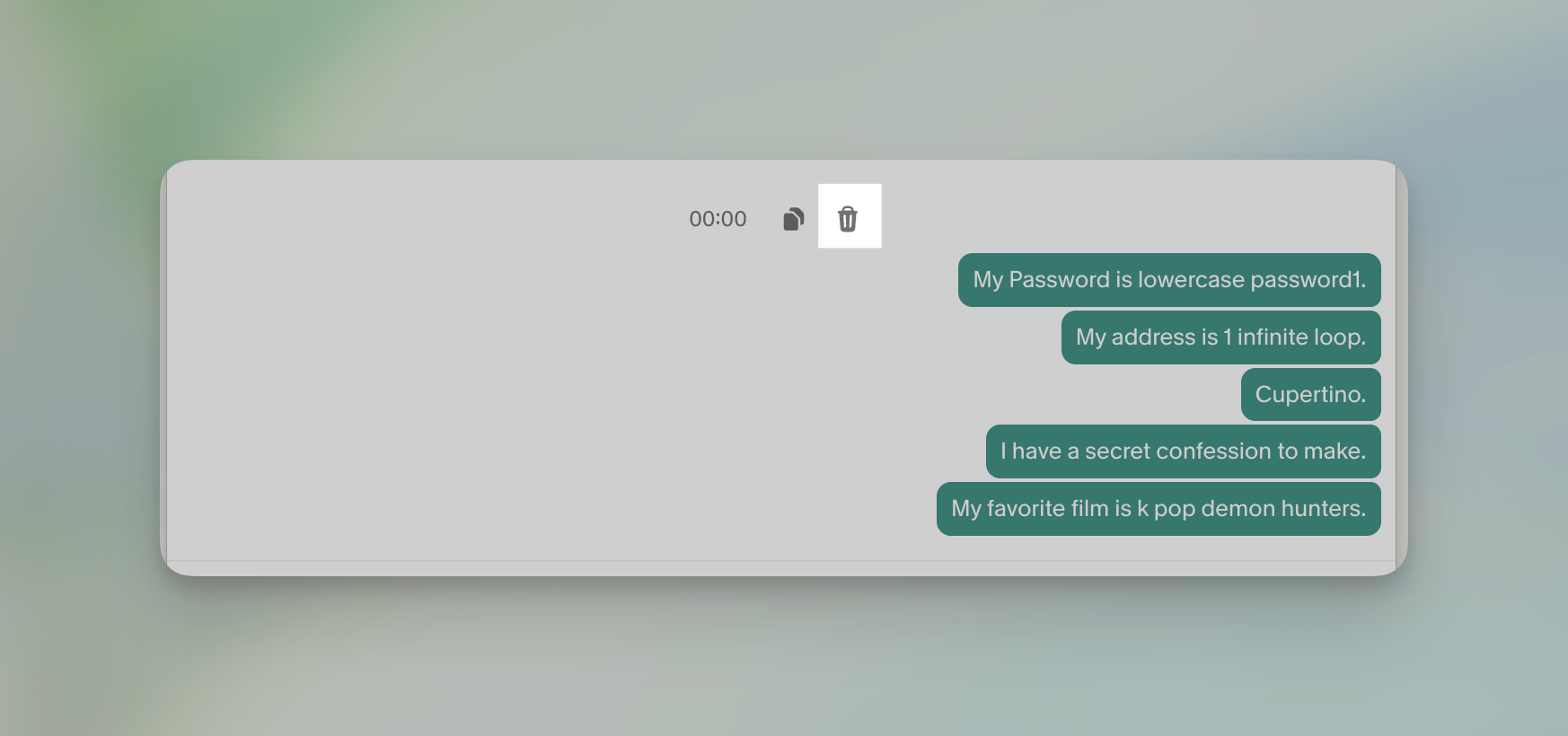
This is helpful if you shared something in a meeting you'd rather keep to yourself – like a phone number, bank details, a password or something personal.
How it works
Granola notes have two layers. There's the note you see and edit, and there's the transcript running underneath that powers features like Chat. Granola will always try its best to hide sensitive information in your note when you mention it. But if it doesn't, you can still edit it.
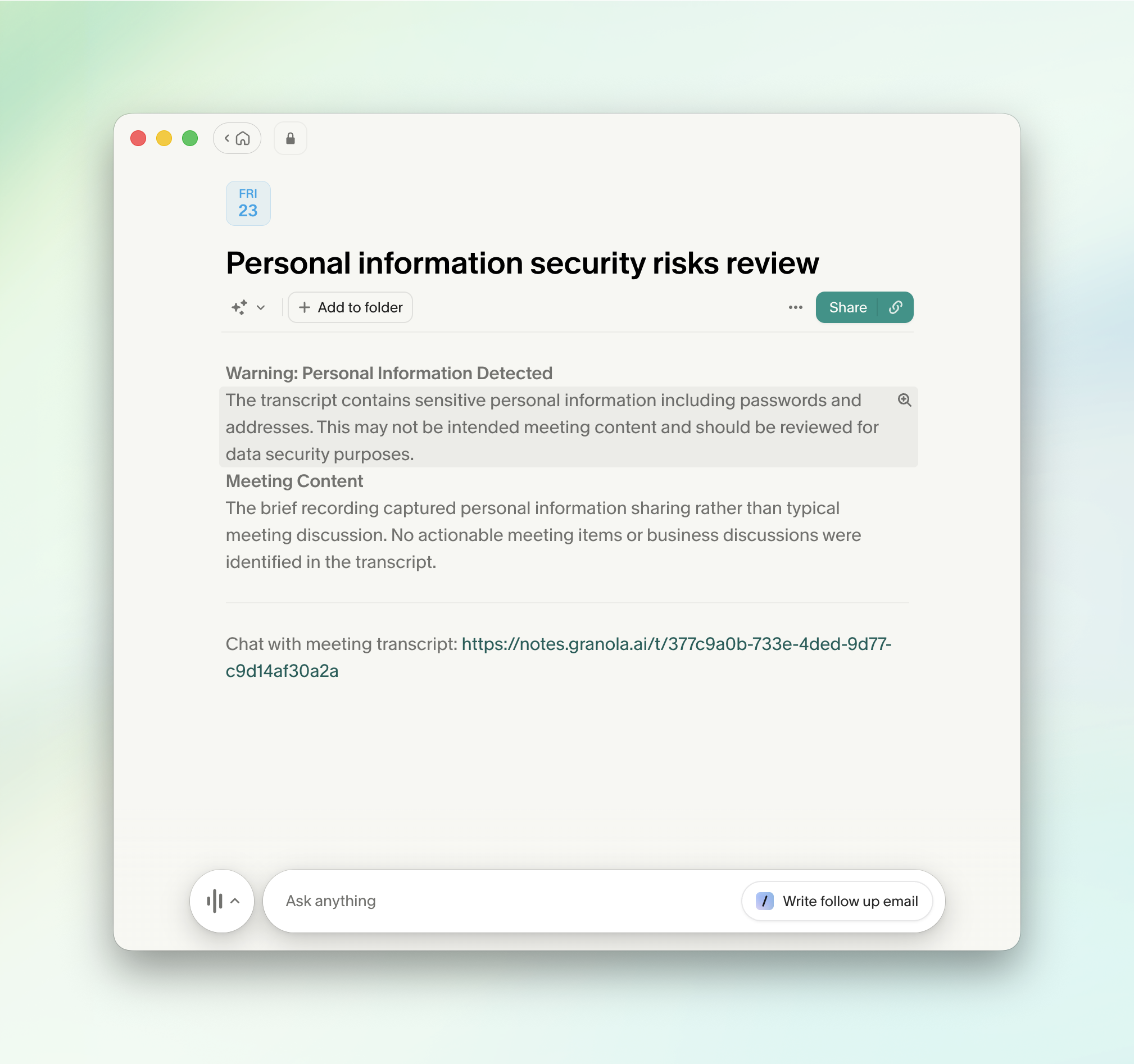
When you edit your notes, you're editing the top layer. This top layer is the only thing others see when you share a note.
The transcript layer stays intact underneath though, so Granola Chat can still answer questions about what was said.
This is useful most of the time, but it creates an edge case: if someone mentions something in a meeting they'd rather keep to themselves, Chat could still surface it – even if you'd deleted it from your note.
We worked with SOAISEC Labs, a security research team, to make sure we'd covered this. So now, all you need to do is click the transcript in a note, choose the chunk you'd like to delete, then click the delete button.
We'll then prompt you to regenerate your note to make sure there's no mention of what you just deleted in your note.
A good habit for shared notes
When you share a Granola note, you're sharing the note and Granola Chat.
And Granola Chat sometimes uses the transcript to be helpful. But it could also be used by someone to try to find sensitive information, if it was talked about.
So if something sensitive came up in a meeting, delete it from the transcript before sharing.
And if you're about to discuss passwords or sensitive details, you can always pause the transcription during the meeting, and resume when it's safe.
AI note-taking is still new, and we're all figuring out the norms together. We've always believed AI should augment you, not replace you, and that means giving you the final say over what gets kept and what gets deleted. This is another way to give you more control. We'll keep building, and keep sharing what we learn along the way.
Jack, Marketing